#2: Guitar Stereo Mic-ing:

XY Stereo Technique

X/Y stereo technique uses two microphones placed at a 90º angle from the other (see fig.1a), in this case, cardio pattern pattern has been used. It is a coincidence pair. This is because the microphones are placed as close as possible to each other receiving so the audio single arrives at the same time.

(Figure 1a)

How the acoustic guitar sounds

It is explored how changing the position of the microphone affects the sound the guitar produces.

  • Neck – The scratching of the fret board can be heard due to the lack of bass frequency.
  • 12th Fret – A crisp and clean place to mic the guitar because there is a balance of mid and high frequencies, while bass is slightly undermined.
  • Sound Hole – Warm sounding and fuller sound, where the strum of the stings can be heard, lacking the click of the guitar fret board.
  • Bridge – Warm lower mid tones are prominent where resonance from the high strings can be heard.
  • Body – Produces mid and bass frequencies, hearing body resonance.

Trouble shooting

  • Proximity affect, increase in volume and increased bass. Make sure to keep around 10 cm from the mic, to combat this. Can occur more frequently when recoding the Body and Sound hole of the guitar due to the increase in bass.
  • Make sure to check the gain on both track, other wise if the mic is jogged midway through, you could end up with slight increase in phase or one recording being louder than the other.

#1. Ambient Stereo Mic-ing: Blumlein and Mid Side

Mid-side

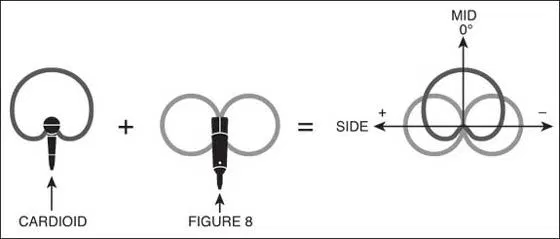
Mid-side is achieved using two microphones close together as possible, with different volumes. This is known as a coincidence pair.

One Cardioid mic is placed facing towards the sound source and a figure of 8 capturing from the side. (Shown in Fig. 1a below).

(Figure 1a)

Due to the microphones having a similar frequency quality volume and sound, the microphones were too similar therefore uninspiring. This could have been fixed by using a AKG C414, with the figure of eight polar pattern instead of the rode. The microphone was also placed to close to the drum kit, which meant some of the toms below the microphone were not being picked up.

Blumlein

This stereo technique uses two figure of 8 microphones place opposing each other. (Shown to the left)

This sound captures the whole room, therefore more ambience and reflecting, causing the sound to be fuller. (Polar patterns figure 2a)

(Figure 2a)

This was placed further away from the drums, which meant it picked up the whole drums and ambience of the studio room. In order to achieve a fuller and more reverberated, reflective sound, the surrounding material should be changed to concrete, glass or metal.

References

  1. https://steemit.com/music/@vishweshv/sound-engineering-and-music-production-blog-14
  2. https://www.bhphotovideo.com/explora/audio/tips-and-solutions/recording-mid-side-microphone-configuration
  3. https://sciencing.com/types-materials-create-echoes-8788972.html